


For 20 Years I Told Women Their Bladder Problems Were Just "Getting Older." I Was Wrong.
A nurse of over twenty years in women's health explains what is really behind the leaks, the urgency and the broken sleep after 50, and why nearly everything women try first fails to fix it.

There's one patient whose face comes back to me often. Helen. 64. Retired primary school teacher. She sat across from me on a Wednesday morning and told me, quite plainly, that she'd stopped going to her book club.
She and her friend Pam had hosted that book club together for nine years, taking turns with the tea and the chairs. Then, at Pam's kitchen table one evening, Helen sneezed and it happened. She didn't say anything. She just stood up, made an excuse about the time, and drove home. She hasn't been back since.
She told me all this without a single tear. No anger either. Just the flat, tired voice of someone describing a thing she'd already made her peace with.
“She'd spent a year quietly making her world smaller, and she talked about it the way you'd talk about a hobby you'd simply grown out of.”
— Claire Bennett, RGN
That day I gave her what I always gave patients in her position. Pelvic floor exercises. A leaflet on bladder training. And she left, and I sat there with her notes still open on the screen, properly bothered for what felt like the first time in years.
Not bothered by Helen specifically. Bothered by how many Helens there had been. And by a question I don't think I'd ever let myself ask properly: was I actually right that there was nothing more to offer?
I spent the next several months finding out. What I learned changed the way I practise.
The Bladder Shield Effect
Why leaks, urgency and disturbed sleep have very little to do with age, and a great deal to do with one overlooked tissue.
“Your bladder wall has a thin protective layer inside it, similar in job to the barrier that keeps your skin from drying out. Once oestrogen starts to fall, that layer thins and loses moisture. A drier lining becomes far more sensitive. It reacts to tiny amounts of urine as though the bladder were full. It sends urgent signals with no warning. And it's the reason so many women are wide awake at 3am for no obvious reason.”
That inner lining is a real, well documented structure, sometimes referred to in the research as the GAG layer. In women past midlife, falling oestrogen thins this layer and leaves nerve endings closer to the surface, where they misfire more easily. At the same time, magnesium levels tend to drop, and magnesium is what keeps the detrusor, the muscle that squeezes the bladder, working in a steady, voluntary rhythm. Without enough of it, that muscle can twitch and contract on its own schedule, not yours.
The urgency isn't a sign of weakness. It's a lining running dry and a muscle running short on the mineral that calms it. Neither of those things is fixed. Both of them can be rebuilt.
Why the Usual Advice Hasn't Worked for You
Pelvic floor exercises
train the muscles around the bladder, not the lining inside it. Useful, but they're working on the wrong layer entirely.
Prescription anticholinergics
quiet the urgency signal without touching the lining, the magnesium shortfall or the tissue underneath. Stop taking them and the old symptoms come straight back. There's also a growing body of research linking long term use in older women to a higher risk of cognitive decline, which is a serious trade off for symptom control alone.
Cutting out tea, coffee and fizzy drinks
can ease irritation a little. It does nothing for a lining that's already thin and dry.
Pads and liners.
Most women spend somewhere north of £700 a year on them, often buried at the bottom of the trolley or ordered online under a different name so nobody has to see it on the statement. That isn't treatment. It's a monthly bill for a problem that was never actually addressed.
None of the above rebuilds the lining or restores the mineral balance behind it. Until both are addressed, the same symptoms keep resurfacing, whatever you try around the edges.
The Six Ingredients Behind a Healthy Bladder Lining
Months spent reading through the research kept circling back to the same six nutrients. Each one covers a different piece of the puzzle, and together they give the bladder what it needs to repair itself from the inside.
-
1
Hyaluronic Acid, direct support for the lining
The main building block the protective layer is made from. Research out of several European trials links it to noticeable improvements in urgency and lining integrity within weeks.
-
2
Magnesium Glycinate, keeps the muscle calm
Clinical work published in obstetrics and gynaecology journals has tied magnesium to fewer night time trips and less daytime urgency. It supports the calcium signalling that keeps the detrusor from firing at random.
-
3
Soy Isoflavones, gentle hormonal support
Plant compounds that behave a little like the body's own oestrogen where the bladder wall and urethra need it most. Trials in postmenopausal women have shown reduced urgency and less tissue thinning over time, with none of the risks that come with hormone therapy.
-
4
Pumpkin Seed Extract, strengthens the bladder neck
A randomised study recorded a meaningful drop in stress incontinence after roughly six weeks of consistent use. It targets the muscle fibres responsible for keeping things sealed when you cough, laugh or bend to lift the shopping.
-
5
Horsetail Extract, feeds the mucosal tissue
Rich in natural silica, which the body uses to keep the tissue lining the urinary tract supple and resilient rather than fragile.
-
6
Cranberry Extract, a protective coating
Proanthocyanidins form a light coating over the bladder's surface cells, making them less prone to irritation and less likely to trigger a false alarm.
Why all six together, and not just one:
Most bladder supplements pick a single ingredient and stop there. The reality is that the lining, the muscle, the hormonal environment and the deeper tissue all need attention at once. Treating one and ignoring the rest is like mending one wall of a house while the roof keeps leaking. You need all four areas covered, at doses that actually match the research, at the same time.
What Women Tell Us After Eight Weeks
Based on post-purchase surveys of Everease customers. Individual results vary.
What to Expect, Week by Week
The first thing I tell every patient before they start: this is your body rebuilding a structure, not a tablet masking a symptom. The changes build gradually across the full eight weeks, and that timeline matters more than people expect.
Week 1 to 2, laying the groundwork
Most women notice very little at this stage, and that's completely normal. Magnesium levels begin to steady the detrusor behind the scenes. A few mention slightly calmer mornings. The early work is happening where you can't yet feel it.
Week 3 to 4, the first real signs
This is usually when the first noticeable shift shows up. One fewer trip at night. Urgency that used to feel like an emergency now feels manageable. Several women have told me they left the house without planning their route around toilets for the first time in a long while.
Week 5 to 8, the turning point
The bladder stops running the day. Stress leaks become occasional rather than constant. Women go back to things they'd quietly stopped doing: cinema seats, long coach journeys, trousers they'd stopped trusting. Sleep evens out. Confidence comes back with it.
Week 8 onward, the new normal
The thing nearly every woman says, in her own words, is that she stopped thinking about her bladder at all. Not managing it better. Not working around it more cleverly. Just not thinking about it. For anyone who has spent years organising a life around this, that shift is enormous.
So, What Are Your Real Options Here?
I'll be straightforward. There are three paths open to you from here, and only one actually deals with the problem.
The Formula I Recommend to My Own Patients
I don't usually put my name near a specific product. My recommendations are meant to follow the research, not a relationship with a company. But once I'd measured the available formulas against what's actually published, one of them lined up consistently with the evidence, at doses that matched the studies rather than a fraction of them.
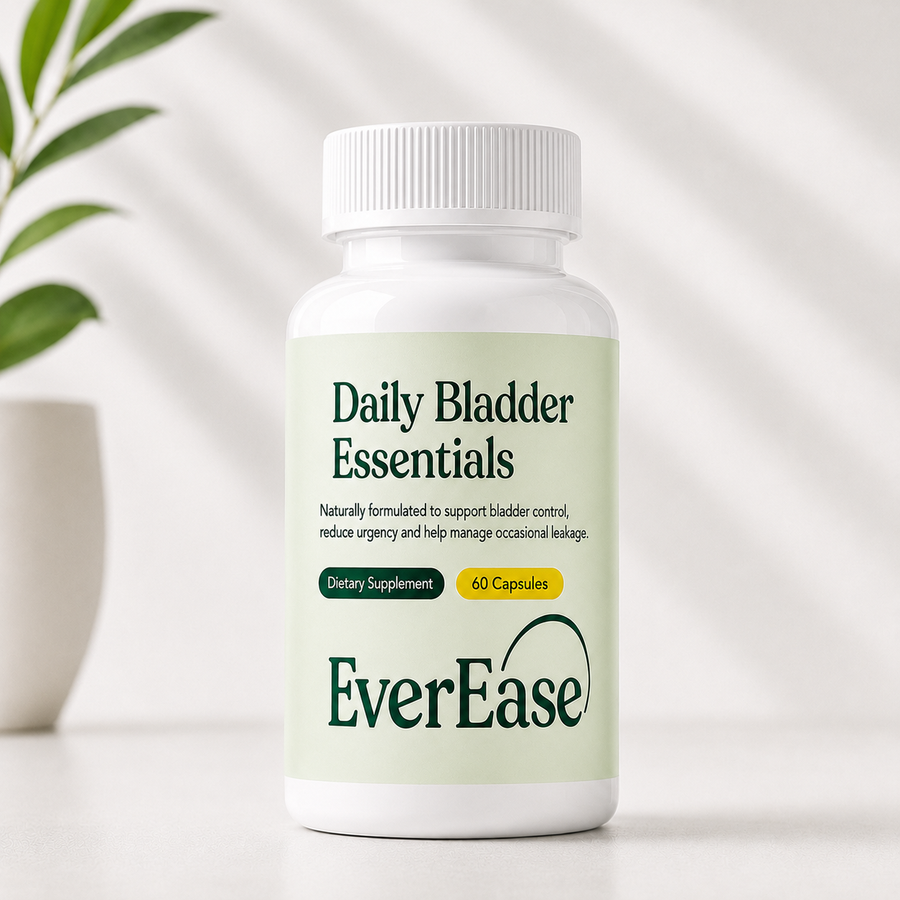
It's called Everease. Two capsules a day, no prescription needed. It's the only formula I found that carries all six ingredients at levels that reflect the research, without fillers or unnecessary additions. It comes with a 90-day money-back guarantee, which matters here, because rebuilding a lining takes real time, and women deserve the full window to feel the difference before they have to decide anything.
add an image in the theme customizer
“This has nothing to do with age. This is the feeling of a bladder lining that's run dry, and one that can recover once it gets what it actually needs.”
Helen came back to see me two months later. She'd been to the theatre. With her granddaughter this time. Middle of the row. She didn't get up once.
She told me, “I felt like someone watching a play, not someone managing a condition.”
She asked why nobody had explained any of this to her sooner. I gave her the honest answer. There's no money in explaining it. No pharmaceutical company funds awareness campaigns about a lining most GPs were never taught to think about in this way. The research is there, it has been for years, but it sits in journals that most people never open.
So women carry on buying the pads. Cancelling the plans. Lying awake at 3am. Watching their world get a little smaller each year, because somebody told them ageing was to blame.
It was never about age. It's about a bladder lining that ran dry, and with the right support behind it, one that can heal.
ADVERTISING FEATURE: This article is produced in commercial partnership with Everease. It is written in an editorial style but is a paid promotional feature. “The Bladder Shield Effect” is an explanatory framework drawn from published research and is not a recognised medical diagnosis. For general information only. Food supplements should not be used as a substitute for a varied and balanced diet. Consult a healthcare professional before use if you are pregnant, breastfeeding, or taking medication. Individual results vary.

Comments from readers
847